AI, Tech and VC Daily Briefing: Wednesday 18 November 2026
Good morning, here's today's briefing. The lead: Nvidia smashes forecasts with $115.8 billion in quarterly revenue, and says it will not bring back Jensen Huang. Also today: Anthropic looks set to price its IPO above the range, the US closes the overseas data centre loophole for Chinese firms, Isomorphic Labs raises $5 billion, OpenAI opens its Daybreak cyber tools to NATO, and Replit sends agent swarms after business goals.
LEAD: Nvidia beats forecasts and rules out a Huang return
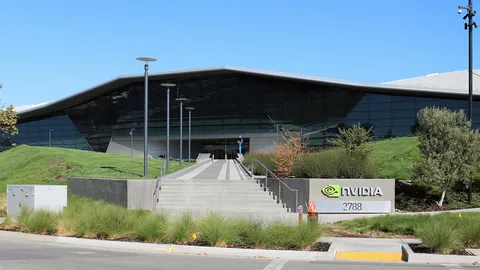
Background: Jensen Huang resigned as Nvidia's chief executive last week amid a scandal over his relationship with a former executive at a Singapore company suspected of funnelling chips to China. Interim chief executive Colette Kress is now running the company.
What happened: Nvidia reported revenue of $115.8 billion for the quarter to 25 October, up 103% on a year earlier, with data centre revenue of $107.6 billion, up 110%, and net income of $65.3 billion. It guided to $130 billion, plus or minus 3%, for the current quarter, assuming no data centre compute sales to China, and said its Vera Rubin NVL72 racks have shipped in "the fastest product ramp in the company's history". Nvidia Analysts polled by LSEG expected $109.10 billion in revenue and adjusted earnings of $2.48 a share, against $2.68 delivered. CNBC At the start of the earnings call, board chair Harvey Jones said the board does not intend to bring Huang back as chief executive, and Kress raised Nvidia's growth forecast for the financial year ending January 2028 from 70% to 75%. Shares rose more than 3% in extended trading. CNBC, Investopedia
Why it matters: The leadership crisis has not dented demand for AI chips. For a market that has cooled on AI, it is a reassuring result on the eve of Anthropic's listing.
Anthropic is likely to price its IPO above the range

Background: Anthropic is offering 825 million shares at $70 to $78 each, which at the top would raise more than $64 billion and value it at up to $1.405 trillion. Yesterday's edition covered reports of orders nearly seven times the shares on offer.
What happened: Multiple sources told CNBC's David Faber on Tuesday that Anthropic is likely to price above that range, and planned to close its order books at 4pm Eastern time on Tuesday. Pricing is expected on the evening of 18 November, with shares trading on Nasdaq under the ticker "ANT" from 19 November. CNBC, CNBC
Why it matters: Pricing above the range would show investors still pay up for the leading labs, even as the Nasdaq has fallen about 5% in the past month, according to Investopedia. Investopedia
The US closes the overseas data centre loophole for Chinese firms

Background: US rules already block sales of the most advanced AI chips to Chinese companies, but Chinese firms could rent the same computing power from data centres in other countries.
What happened: On Monday the Commerce Department issued an interim final rule, its first export control update since the Huang scandal broke, Fortune reports. It requires licences to export advanced AI chips to data centres in Indonesia, Malaysia, Singapore, Thailand and Brazil, and requires large data centre operators anywhere to get a licence before giving access to China-headquartered companies. Data centres already serving such firms get 90 days from the rule taking effect to obtain one. Users that are, or are owned by, US-headquartered companies are carved out of the licence requirement, though the remote access limits still apply to them. Megaspeed, the Singapore company accused of funnelling Nvidia chips to China, has denied doing so. Fortune
Why it matters: Southeast Asia's data centre boom partly rests on Chinese demand. One analyst told Fortune the controls "could be disastrous" for Malaysia.
Funding: Isomorphic Labs raises $5 billion
Background: Isomorphic Labs was spun out of Google DeepMind in 2021 and builds on the AlphaFold protein structure work that won a Nobel Prize. It raised $2.1 billion in May.
What happened: Isomorphic raised a $5 billion Series C co-led by Greenoaks and Sequoia Capital, with new investor Andreessen Horowitz and all existing backers, including Alphabet's GV and CapitalG, Thrive Capital, MGX, Temasek and the UK Sovereign AI Fund, TechCrunch reports. The money goes on its drug design engine and on taking drug candidates into clinical trials, after what it calls "positive preclinical results" in oncology and immunology. It did not disclose a valuation; Bloomberg had reported it was seeking $50 billion. TechCrunch, Isomorphic Labs
Why it matters: $7.1 billion raised in six months is a huge bet on AI drug design, yet its candidates are only now heading for clinical trials. That is where the bet gets tested.
OpenAI opens its Daybreak cyber tools to NATO and European governments

Background: Daybreak is OpenAI's programme giving vetted defenders access to its most capable cybersecurity models.
What happened: OpenAI said on 17 November it is providing NATO's Communications and Information Agency with advanced cyber models, and that NATO has used up to 300 billion tokens a month. At NATO's Crossed Swords 2026 exercise, participants built and ran AI agents for cyber operations using Daybreak. The EU agency ENISA used the models to find four vulnerabilities in software used across EU institutions, and a joint ENISA and CERT-EU review found 95% of 88 potential issues were genuine. CERT Polska found six vulnerabilities in MikroTik routers. France, Germany, Poland and Ukraine also have access. OpenAI
Why it matters: Military alliances are now big AI customers. The same week its agents are being sued over a cyberattack, OpenAI is selling cyber defence to NATO.
Competitor move: Replit launches Missions, agent swarms aimed at business goals

Background: Replit runs an online coding platform with its own AI agent that builds software.
What happened: Replit launched Missions on 17 November: you define an outcome and a budget, and a swarm of agents plans, builds, tests and iterates towards it. Replit says Missions built DataCat, an in-house application monitoring platform with dashboards, alerts and tracing, in two days within a $3,000 budget. On 13 NumPy speed tasks, a single agent achieved speedups of up to 4 times, a 16-agent swarm 17 times and a 32-agent swarm 19 times. Replit
Why it matters: Coding tools are moving from writing code on request to chasing goals with a budget, the same direction Cognition, OpenAI and Anthropic are heading.