AI, Tech and VC Daily Briefing: Thursday 19 November 2026
Good morning, here's today's briefing. The lead: Anthropic has priced its IPO at $83 a share, above its range, raising about $81.3 billion ahead of its Nasdaq debut today. Also today: OpenAI says its models found a year's worth of chip design gains for AMD in under five months, Microsoft swaps more of its partners' models for its own inside its products, Genesis AI raises $500 million for robots, and BrightAI raises $97 million to modernise infrastructure inspections.
LEAD: Anthropic prices its IPO at $83, above the range

Background: Anthropic had offered 825 million shares at $70 to $78 each. Yesterday's edition covered reports that it was likely to price above that range.
What happened: Anthropic priced its IPO at $83 a share on Wednesday, confirming earlier reports by Reuters and Bloomberg in a statement. The offering was upsized: Anthropic and its seven co-founders sold about 980 million shares, raising $81.3 billion, CNBC reports, more than the $75 billion SpaceX initially raised in its record June IPO, though SpaceX reached $85.7 billion after underwriters exercised their overallotment. CNBC, Reuters via US News Bloomberg reports the deal also includes a $26 billion private placement, taking the total raised to $107.3 billion. Bloomberg Law TechCrunch reports a fully diluted valuation of about $1.5 trillion, up from $965 billion in its May private round but below the $2 trillion it was reportedly aiming for months ago. Shares are expected to start trading on Nasdaq today, 19 November, under the ticker "ANT". TechCrunch
Why it matters: It is the first stock market listing by a major frontier AI lab. Pricing above the range, despite the Nvidia leadership crisis and bubble worries, shows investors still pay up for the leading labs; today's first trades are the next test.
OpenAI says its models found a year of chip design gains for AMD in under five months
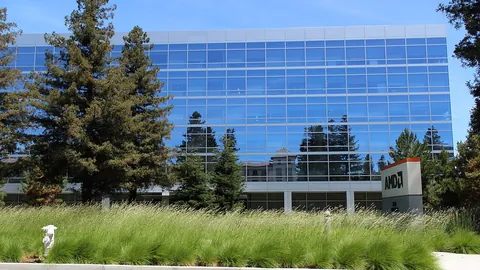
Background: OpenAI has used its own models to help design Jalapeño, its first custom inference chip, since early 2025, and works with AMD on hardware.
What happened: OpenAI said on 18 November its models rewrote the code describing circuits in AMD's flagship GPU designs and achieved up to 14% improvement in power, performance and area against heavily optimised baselines, which it calls roughly a year of progress in less than five months. AMD has already put some of the changes into a recent design sent for manufacturing, and verified single-digit percentage gains on key blocks of its upcoming flagship CPU. On Jalapeño, OpenAI estimates model-proposed changes cut standard-cell area by about 13% in the vector unit and 10% in the matrix unit. In tests on two open-source RISC-V processor cores, GPT-6.2 Astra had the highest average score. OpenAI is also working with Synopsys to train a new model, GPT-Synopsys, to use Synopsys chip design tools the way expert designers do. OpenAI
Why it matters: AI improving the chips that run AI is a feedback loop the whole industry is chasing. The Decoder notes Anthropic says its Mythos model handled prompt processing for a model on AMD MI355X GPUs in three days, instead of the six to twelve months the task normally takes. The Decoder
Competitor move: Microsoft swaps its partners' models for its own inside its products

Background: Yesterday's edition covered Microsoft's seven new MAI models, priced to undercut OpenAI and Anthropic. Microsoft holds a non-exclusive licence to OpenAI's models through 2032.
What happened: A closer look at the Ignite details shows how far Microsoft is moving its own products onto its own models, The Decoder reports. MAI Work Flash now runs in Microsoft 365 and Fabric IQ, and Microsoft says it matches GPT-6 Luna on internal Excel and PowerPoint tests. Its Decision 1.1 model, built on Google's open Gemma, decides whether a Copilot request goes to Copilot or Cowork. From mid-December, MAI Cyber 2 Flash will automatically replace the existing model for eligible customers of Microsoft's security platform MDASH, where MAI Cyber models already handle nearly 40% of scans. A new "MAI Licensed Weights" offer will let companies fine-tune MAI models on their own data in their own Azure setup, with launch date and pricing still pending. The Decoder
Why it matters: OpenAI's biggest backer is steadily becoming a competitor, swapping in its own cheaper models wherever they are good enough.
Funding: Genesis AI raises $500 million to build general-purpose robots

Background: Genesis AI is a robotics company based in Paris and Palo Alto. Bloomberg reported in July that talks valued it at about $3 billion before new money.
What happened: Genesis AI raised a $500 million Series A at a $3.5 billion post-money valuation, co-led by Premji Invest, Khosla Ventures and Eclipse, with Nvidia, AMD Ventures, Samsung Next, Bpifrance, T. Rowe Price, Zoom and Ericsson among others. The money goes on developing and deploying its general-purpose robot, Eno, combining robot intelligence, hardware and real-world training data. Tech Funding News, Tech Startups
Why it matters: A $500 million first big round shows how much money is chasing robots that can do physical work, with chipmakers Nvidia and AMD both on the cap table.
Funding: BrightAI raises $97 million to modernise infrastructure inspections
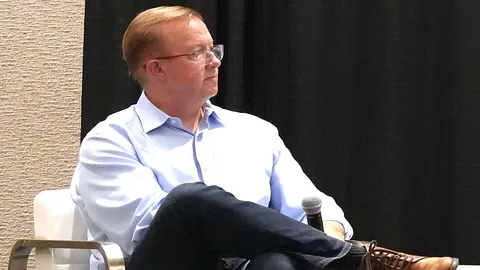
Background: Power companies, water utilities and pipeline operators still largely rely on people walking and checking their networks. BrightAI founder Alex Hawkinson says "The Romans are laughing at us."
What happened: BrightAI said on 18 November it raised $97 million in a round led by Smith Point Capital, the growth firm started by former Salesforce co-CEO Keith Block. GE Vernova, already a customer, also invested, with existing backers Khosla Ventures, Inspired Capital and Upfront Ventures. The round brings total funding to $184 million and values BrightAI at $750 million, according to a person familiar with the matter, Fortune reports. Fortune
Why it matters: "Physical AI" for ageing utilities is drawing serious money, with an energy equipment giant backing a company it already buys from.