AI, Tech and VC Daily Briefing: Monday 16 November 2026
Good morning, here's today's briefing. The lead: Anthropic enters IPO week as the test the whole AI trade is waiting on. Also today: more than 115,000 sign a petition to bring back Jensen Huang, ex-Anthropic researchers raise $1 billion to automate AI research, GitHub Copilot cuts six older models, Tesla opens personal Cybercab orders with a $299 monthly fee, and SpaceX says a low-fuel alarm cost it the booster catch.
LEAD: Anthropic enters IPO week as the AI trade's make or break test

Background: Anthropic launched its roadshow on 10 November, offering 825 million shares at $70 to $78 each, and plans to list on Nasdaq under the ticker ANT. Pricing is set for Wednesday 18 November and trading for Thursday 19 November.
What happened: Weekend coverage framed the listing as a referendum on AI. CNBC reports that AMD, Broadcom, Google, Micron, Microsoft, Nvidia and TSMC are together investing $26 billion at the IPO price, and that Anthropic's prospectus shows more than $900 billion in spending commitments, including at least $110 billion with Amazon over a decade. It recorded a net loss of $104 billion in the first nine months of 2026, and the IPO could raise over $90 billion on top of $132 billion in cash and short-term investments. CNBC says Google is set to own about 13% after the IPO and is backstopping $19 billion of Anthropic's lease commitments to TeraWulf. Semafor says the deal is roughly six times oversubscribed and that "picks and shovels" firms have shed $4.2 trillion in value since June, while Anthropic expects a $10 billion investment from Nvidia right after listing. Nvidia reports quarterly results on Tuesday, two days before the debut. CNBC, Semafor, Anthropic, Yahoo Finance
Why it matters: "The numbers are just staggering," Eclipse partner Joe Fath told CNBC. Chipmakers, clouds and lenders all need this listing to go well, because Anthropic's spending is a large part of their future revenue.
More than 115,000 sign a petition to bring back Jensen Huang
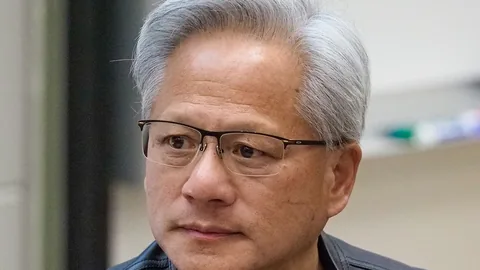
Background: Jensen Huang resigned as Nvidia chief executive on Thursday, four days after admitting an affair with a chip executive suspected by US intelligence of being a Chinese spy. CFO Colette Kress is interim CEO.
What happened: A "Stand with Jensen" petition asking the board to reinstate Huang while an independent investigation runs appeared to have more than 115,000 signatures by Saturday afternoon, TechCrunch reports. The site says signers include 5,965 current Nvidia employees, 1,108 former employees and 63,063 shareholders. Named supporters include Elon Musk, Replit CEO Amjad Masad, Epic Games CEO Tim Sweeney and Y Combinator CEO Garry Tan. "Jensen deserves due process, not mob justice," it says. The signature counts come from the petition site and have not been independently verified. TechCrunch
Why it matters: The board now faces public pressure from inside its own workforce and from some of the biggest names in tech, days before an earnings report and the Anthropic IPO that Nvidia is due to invest in.
Funding: ex-Anthropic researchers' Mirendil raises $1 billion to automate AI research
Background: Mirendil was launched last year by chief executive Behnam Neyshabur and chief technology officer Harsh Mehta, both former Google DeepMind and Anthropic researchers, SiliconANGLE reports. It builds agents that do the hands-on work of AI research.
What happened: Mirendil announced a $1 billion Series A on 12 November, led by Kleiner Perkins and Clearlake Capital, with Battery Ventures, Doerr Capital, Gil and Co, Google, M13, Pear VC and S32 also investing. The company says one researcher working with agents pretrained its coding model Mirendil-Base from scratch in 3.5 months on less than $10 million of compute, then turned it into Fern, which holds up to 10 million tokens of context. Its system Lor, now in private beta, runs "hundreds of agents writing code and running experiments for days at a time." SiliconANGLE reports the agents wrote more than 99% of the code behind Mirendil-Base. Mirendil, SiliconANGLE
Why it matters: A billion-dollar first institutional round for a small team shows investors are betting that agents, not headcount, will set the pace of AI research.
Competitor move: GitHub Copilot cuts six models and adds Gemini 4 Hydrogen
Background: GitHub Copilot lets developers pick models from several labs, which makes its line-up a running scoreboard of what developers are offered.
What happened: GitHub said on 13 November it will remove Claude Fable 5, Claude Haiku 4.5, Gemini 3.8 Flash, Gemini 4 Argon, Grok 4.6 and Kimi K3 from all Copilot experiences on 14 December, pointing users to newer versions. Kimi K3's replacement is listed as "to be announced". The same day it made Google's Gemini 4 Hydrogen generally available across Copilot, including the coding agent and CLI, billed at provider list pricing. GitHub Changelog, GitHub Changelog
Why it matters: Models now last months, not years, in coding tools. Teams that pin workflows to one model version have about four weeks to move.
Tesla opens personal Cybercab orders, with a $299 monthly fee

Background: Tesla's Cybercab is its gold-coloured autonomous car, built for the same service areas as its robotaxi network. Tesla recently said it will stop making the Cybertruck next year to build more Cybercabs.
What happened: Tesla said on Friday evening that "select customers" can pre-order a Cybercab for personal use at $29,990, TechCrunch reports. Buyers must take delivery in one of a handful of Texas cities, the car only works inside geofenced areas, and owners must pay $299 a month to operate it, with estimated delivery in December 2026. Elon Musk replied that the fee is "too high" and should be more like $115 a month, and said nationwide availability depends on regulatory approval. TechCrunch
Why it matters: It is a first test of whether people will buy a self-driving car that only goes where the company's maps allow.
SpaceX: a low-fuel alarm, not guidance, cost it the booster catch
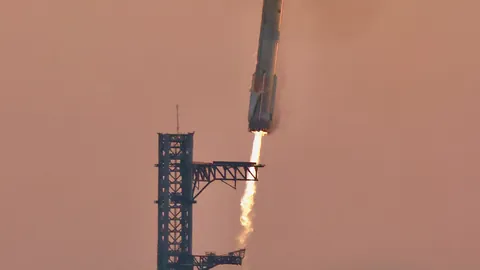
Background: On Starship Flight 15, SpaceX caught the Ship upper stage after orbit for the first time, but Super Heavy Booster 22 aborted its tower catch and blew up just above the Gulf of Mexico.
What happened: SpaceX first blamed a guidance issue, then corrected itself. Spokesperson Dan Huot said the guidance system worked as intended and triggered the abort because the booster "was not in the place that it was supposed to be." SpaceX's Kate Tice later said early indications are that the booster ended its boostback burn early "due to a low fuel mass alarm", and the root cause is still under investigation, Space.com reports. One of 33 engines also dropped out after stage separation. Space.com
Why it matters: A full catch of both stages is the step SpaceX needs for cheap, fully reusable launches. The fix now looks like a fuel or engine problem, not the landing software.