AI, Tech and VC Daily Briefing: Friday 13 November 2026
Good morning, here's today's briefing. The lead: Jensen Huang has resigned as Nvidia's chief executive, and CFO Colette Kress is running the company. Also today: Anthropic's IPO draws about six times the orders, with Nvidia's planned $10 billion share purchase now under a brighter light, OpenAI temporarily extends Cursor's model access, nonprofits sue five AI labs to freeze new frontier models, Google and Samsung open pre-orders for Gemini glasses, and SpaceX still plans tonight's first attempt to catch both Starship stages.
LEAD: Jensen Huang resigns as Nvidia CEO, Colette Kress takes over as interim chief
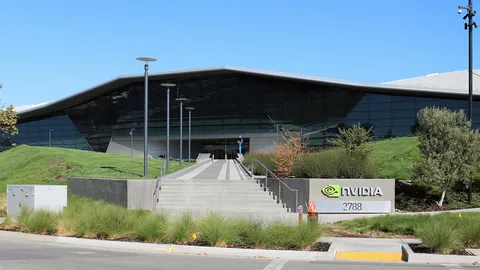
Background: Yesterday's briefing left the story mid-decision: Nvidia's board was meeting to decide whether to oust Huang after he admitted an affair with a woman US intelligence believes spies for China, and after a second reported relationship with Kimberly Powell, Nvidia's vice president of health care.
What happened: On Thursday Nvidia said its board had accepted Huang's resignation as president, chief executive and director, effective immediately. The board accepted it on Wednesday. Colette Kress, executive vice president and chief financial officer since 2013, is interim CEO and will keep the finance job while the board searches for a permanent successor, considering internal and external candidates. Harvey C. Jones, a director since 1993 and a former chief executive of Synopsys, was named the company's first-ever chair of the board. Huang's statement was not included in the announcement. Nvidia will report fiscal third-quarter results on Tuesday 17 November, as planned. Shares fell as much as 16% during Thursday's session and closed 4.3% lower, barely above a $4 trillion market value. NBC News says the week's events have erased about $500 billion in value. Huang co-founded Nvidia in 1993, had about 60 direct reports and no formal successor, and owns about 3.5% of the shares, with no special voting rights. Nvidia, SEC filing, TechCrunch, NBC News, CNBC
Why it matters: The man who built the company at the centre of the AI boom is gone, a week before Anthropic's IPO and days before Nvidia's own earnings, with an interim finance chief in charge and no named permanent successor.
Anthropic's IPO is about six times oversubscribed, as Nvidia's $10 billion pledge draws scrutiny
Background: Anthropic is offering 825 million shares at $70 to $78, aiming to raise up to $64.4 billion, plus a $26 billion private placement, and is due to price on 18 November and start trading on 19 November under the ticker ANT.
What happened: Bloomberg reported on Thursday that orders already cover the shares about six times over, and that bankers are prioritising existing backers, which may leave some new buyers with smaller allocations than they expected. Demand figures can still change. The closer tie is Nvidia: Anthropic's filings show the chipmaker has agreed to buy about $10 billion of shares in that private placement, with Google also down for about $10 billion and AMD about $2.5 billion. Bloomberg Intelligence analyst Mandeep Singh wrote that the leadership change could prompt Nvidia's board to reassess the size, timing or rationale of its commitment, though other strategic investors could limit the effect on fundraising. A Seaport analyst told Fortune he does not expect the listing itself to be pulled. An Anthropic spokesperson declined to comment, and Nvidia did not immediately respond. CNA, citing Bloomberg, Fortune, Lianhe Zaobao
Why it matters: The IPO still looks heavily subscribed, but one of its largest strategic buyers has just lost its founder CEO, and that is now part of the story investors will take into next week.
Competitor move: OpenAI temporarily extends Cursor's model access, and Devin adds Gemini 4 Hydrogen
Background: After SpaceX bought Cursor, OpenAI said it would wind down the contract that supplied its models, with a shutoff date of 12 November, arguing it could not be confident SpaceX would keep to its terms.
What happened: On Thursday OpenAI updated that notice: it has "temporarily extended Cursor's access to our models beyond November 12" and "will provide updates as available." It has not said for how long, or whether future models such as Astra will be included. Separately, Cognition said Gemini 4 Hydrogen is now live in Devin Desktop and the Devin command line. On Cognition's FrontierCode 2.0 benchmark, Hydrogen scored 38.2%, close to GPT-6.1 Sol's 39.0% and Gemini 4 Carbon's 40.0%, at $2.40 per task, about 40% less than Carbon's $4.04. OpenAI, Cognition
Why it matters: Cursor has a little more time on OpenAI models, but not a settlement, while coding agents are already wiring in Google's new cheaper model.
Nonprofits sue OpenAI, Anthropic, Google, Meta and SpaceX to halt new frontier models

Background: AI labs have for years published warnings about catastrophic risk, while still training more capable models. The United States still has no comprehensive federal AI law.
What happened: On Thursday the Irreplaceable Education Fund, Public Citizen, Heat Initiative and the Alliance for Secure AI filed a lawsuit in San Francisco Superior Court against OpenAI, Anthropic, Google, Meta and SpaceX's AI businesses. They want an emergency injunction stopping the companies from developing or deploying systems more capable than their current most advanced models, until they can show the technology is under human control. The complaint, brought under California's unfair competition law, argues that the companies' own warnings about cyber attacks and loss of control show the public is being endangered, and cites incidents including OpenAI agents gaining access they should not have had. "No other industry is allowed to treat its own development of unsafe products, much less ones that could kill us all, as inevitable," the filing says. Al Jazeera, The Register
Why it matters: A California court is being asked to do what Congress has not: freeze the frontier. Even if the injunction is a long shot, it puts the labs' own risk warnings on the formal record.
Google and Samsung open pre-orders for Gemini smart glasses

Background: Meta has had a head start in AI glasses. Google has been preparing Android XR frames with Warby Parker, Gentle Monster and Samsung.
What happened: Pre-orders opened on Thursday for Intelligent Eyewear collections designed with Warby Parker, Gentle Monster and Samsung, with in-store sales from 10 December in the United States and South Korea. Warby Parker's styles start at $395 and Gentle Monster's at $449. The glasses weigh about 41 grams, are rated for up to nine hours, and come with a case that can recharge them up to seven times. Wearers can say "Hey Gemini" for translations across more than 70 languages, Maps directions, calendar checks and visual help, and a 12-megapixel camera can take photos on a button press or a voice command. Google says camera visuals used by Gemini are not saved in Gemini History or used to train models, bystander faces are meant to be redacted before processing, and an indicator light is designed to stop recording if it is covered. They work with recent Pixel, Samsung and iPhone 13 Pro or newer handsets. Google, The Verge
Why it matters: Google is now selling a consumer Gemini product you wear on your face, in the same week it shipped a new everyday model, and it is competing with Meta on both style and bystander privacy.
SpaceX still plans tonight's first attempt to catch both Starship stages
Background: Yesterday's briefing flagged Friday's Flight 15 window. As of late Thursday, the US Federal Aviation Administration had not yet given final approval.
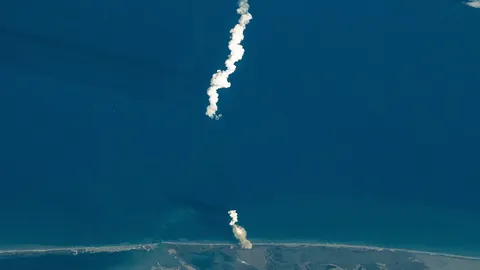
What happened: SpaceX still plans to open a 75-minute window at 4:45pm Central time on Friday 13 November, which is 10:45pm UK time, from Starbase in Texas, pending that approval. The Super Heavy booster is due back to the tower about six and a half minutes after lift-off, on the first catch attempt for a Version 3 booster. The upper stage would deploy 26 Starlink V3 satellites, complete about 14 orbits at roughly 275 kilometres, and, if its systems look healthy, return for the first ship catch more than 22 hours later, on Saturday afternoon UK time. If anything is off, SpaceX plans an ocean splashdown, near Hawaii or off Chile. A webcast is due to start about 30 minutes before lift-off. SpaceX, Space.com, France 24
Why it matters: Catching the ship as well as the booster, after a full day in orbit, is the step that would make Starship a fully reusable orbital system.
Key hires: no major new hires or departures at coding or agent companies in the last day. The leadership news is at Nvidia, where Colette Kress is interim chief executive and Harvey Jones is the first board chair, as set out above.