AI, Tech and VC Daily Briefing: Thursday 12 November 2026
Good morning, here's today's briefing. The lead: Nvidia's board met late into Wednesday evening to decide whether to oust Jensen Huang, and the shares fell more than 8% after hours. Also today: Anthropic's IPO is said to be several times oversubscribed, OpenAI's quarterly revenue reportedly tops $10 billion, ByteDance readies a Muse-style agent, a senior Fed official and CoreWeave's results both point at the strain in AI financing, Britain's Fractile raises $720 million for AI chips, and SpaceX lines up Friday night's double catch attempt.
LEAD: Nvidia's board weighs firing Jensen Huang, with CFO Colette Kress the favoured interim chief
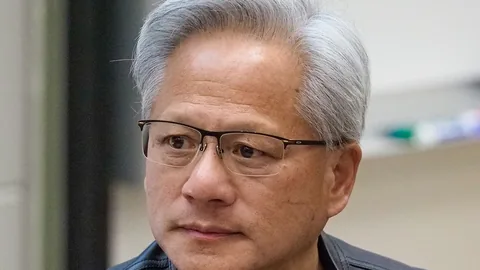
Background: Days ago Huang admitted to an affair with a woman US intelligence believes spies for China's Ministry of State Security, and the board hired law firm Wachtell Lipton to investigate whether he divulged secrets or endangered national security. "I was unfaithful to my wife... There is no excuse for what I did," he told staff on Sunday.
What happened: On Wednesday The New York Times reported a second relationship, with Kimberly Powell, Nvidia's vice president of health care, and minutes later The Wall Street Journal reported the board was preparing to force Huang out. CNBC confirmed the board met to decide his fate, in a meeting that stretched into the evening. Some directors favour CFO Colette Kress as interim CEO, possibly alongside a new chief operating officer, and the board briefed the White House beforehand. An outside search firm is looking for a permanent successor, and Apple hardware chief Johny Srouji is among those being considered. No decision had been announced at the time of writing. Nvidia shares fell more than 8% after hours to a 52-week low, after a 7% drop earlier in the week, and Senators Chris Coons and Elizabeth Warren asked the Cabinet to preserve documents on Nvidia's chip exports to China and on the suspected operative. CNBC, Semafor, Yahoo Finance, The Guardian
Why it matters: Huang has run Nvidia since founding it and is the public face of the AI boom. Losing him a week before Anthropic's IPO would be one of the biggest leadership shocks the AI industry has seen.
Anthropic's IPO is said to be several times oversubscribed
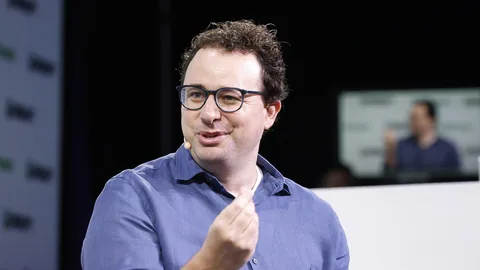
Background: Anthropic launched its roadshow on Tuesday, offering 825 million shares at $70 to $78 under the Nasdaq ticker ANT, plus a $26 billion private placement with seven tech firms.
What happened: Bloomberg reports orders already cover the offering several times over, driven by "anchor-size" interest. Some investors are passing slices of their allocations on to others for a fee, and holders of pre-IPO stakes are pitching them through special purpose vehicles. Dario Amodei and JPMorgan's Jamie Dimon will hold a live-streamed investor event on Friday. The filing shows September-quarter revenue of $16.9 billion, up 46% on the previous quarter, but an operating loss of $567 million after operating income of $974 million in the second quarter. Pricing is planned for 18 November and trading for 19 November. Quartz, MarketWatch via Morningstar, Anthropic
Why it matters: Strong demand despite a falling AI trade suggests the roughly $1.4 trillion valuation may hold, or even rise at pricing.
OpenAI's quarterly revenue reportedly crosses $10 billion for the first time
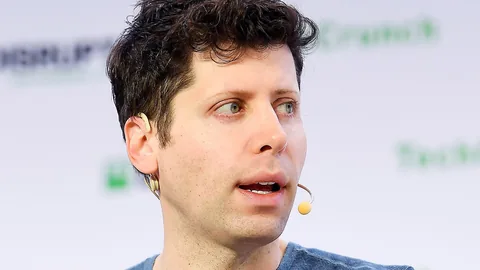
Background: OpenAI's growth slowed earlier this year, and last week it closed only $11 billion of a round once aimed at $30 billion, at a $1.25 trillion valuation.
What happened: Bloomberg reports third-quarter revenue topped $10 billion, up almost 50% from about $6.7 billion in the second quarter, compared with roughly 18% growth the quarter before. The Wall Street Journal says the adjusted operating loss was $10.9 billion, against $10.1 billion in the prior quarter, though the adjusted operating margin improved from minus 150% to minus 109%, and about 100 million people now pay for ChatGPT. President Greg Brockman said last week the company will be IPO-ready in 2027. TechCrunch, MarketWatch via Morningstar, TechCrunch
Why it matters: OpenAI is growing fast again, but still loses more than it earns each quarter, while Anthropic reports more revenue and a far smaller operating loss.
Competitor move: ByteDance readies a Muse-style agent, but says the frontier is years away

Background: Meta's Muse, launched in September, is a voice agent with an animated avatar that runs across Meta's smart glasses.
What happened: Bloomberg reports that ByteDance will release a similar AI assistant within weeks. At an all-hands meeting, co-founder Zhang Yiming said ByteDance can compete with OpenAI and Anthropic at the cutting edge, but not before 2029 or 2030, because its Seed models are pre-trained on far smaller datasets than rivals'. He also repeated that ByteDance should not rely on distillation, training on bigger models' outputs. The Seed unit has roughly 1,000 researchers and engineers. The Next Web, The Japan Times, Techmeme
Why it matters: The owner of TikTok and Doubao, China's most popular chatbot, is entering the consumer agent race while openly admitting it trails on models.
Warning signs on AI financing: the Fed's Bowman and CoreWeave's prepayments
Background: AI data centre spending is increasingly funded with debt and complex deals.
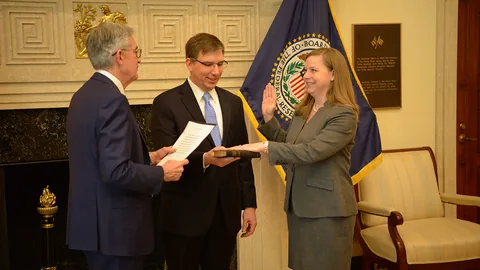
What happened: Fed Vice Chair for Supervision Michelle Bowman warned on 10 November that a "large" stock market correction could follow if AI investment returns disappoint, flagging AI-related debt, off-balance-sheet financing and complex counterparty arrangements. The same day, CoreWeave reported third-quarter revenue of $3.661 billion, up 168% a year, and a $709 million net loss. To fund growth it is asking customers to pay upfront and moving to shorter contracts, expecting about $9 billion in prepayments and deposits over the next three months, more than $3 billion of it from re-contracting existing capacity at higher prices. Reuters says it is targeting profitability in 2028. Federal Reserve, Semafor, TechCrunch, CoreWeave
Why it matters: Demand for compute is still strong enough that customers will prepay, but regulators are now openly worried about how the buildout is financed.
Funding: Fractile raises $720 million for AI chips; Torus and Path Robotics also raise big
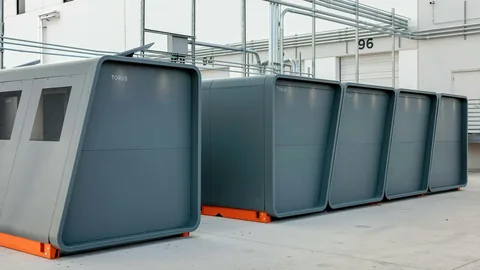
What happened: London-based Fractile raised a $720 million Series C led by Thrive Capital, Founders Fund, Lightspeed and Redpoint, backed by the UK's Sovereign AI Fund, at a valuation the government puts at "over £5 billion" and the FT and Reuters at about $7 billion. Its chips stack ordinary DRAM memory directly on top of the processor to speed up inference for long agent tasks, and CEO Walter Goodwin says it will ship its first chips and systems next year. Utah's Torus raised $500 million led by Magnetar for prefabricated inference sites that deliver 1 to 20 megawatts in 12 to 16 weeks, and Ohio welding-robot maker Path Robotics raised $300 million at a $2.45 billion valuation. TechCrunch, Torus, Tech Startups
Why it matters: Britain is putting state money behind a homegrown AI chip contender, and investors keep funding anything that makes inference cheaper or faster to deploy.
SpaceX sets Friday night for the first attempt to catch both Starship stages
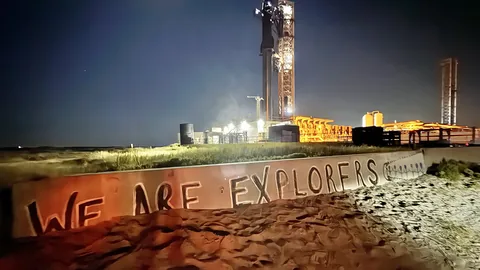
What happened: Starship Flight 15 has a 75-minute window opening at 4:45pm Central time on Friday 13 November, which is 10:45pm UK time, pending regulatory approval. SpaceX will try to catch both the Super Heavy booster and, for the first time, the Starship upper stage back at Starbase, while deploying 26 Starlink V3 satellites. SpaceX, USA Today, Space.com
Why it matters: Catching the ship as well as the booster is the step that would make Starship fully reusable, the key to cheap Starlink and Mars launches.
Key hires: no major new hires or departures at coding or agent companies in the last day; the biggest leadership story is Nvidia's CEO search above.