LLM Daily Briefing: Monday 16 November 2026
Good morning, here's today's briefing. The lead: Meituan releases the weights of LongCat-2.5, a 1.6 trillion parameter agent model trained without Nvidia chips. Also today: Claude Fable 5.2 paints pictures one brushstroke at a time in code, OpenAI starts a science blog with a physicist's account of working with GPT-6 Astra, and Nex-AGI ships an open agent model that it says stopped repeating itself.
LEAD: Meituan opens a 1.6 trillion parameter agent model that never touched an Nvidia GPU

Background: Meituan, the Chinese food delivery giant, runs an AI team called LongCat. It says it trained the previous model, LongCat-2.0, in late June entirely on more than 50,000 Chinese AI chips, after it ran anonymously on OpenRouter as "Owl Alpha".
What happened: Meituan released the weights for LongCat-2.5 a week after unveiling it, The Decoder reports. It is a mixture-of-experts model with 1.6 trillion parameters, about 48 billion active per token, built for long, multi-step agent work, especially coding. Through the API it takes up to one million tokens and writes up to 128,000. It reads text, images and video, turning images into tokens rather than bolting on a separate image encoder. In training, the team cut off internet access, removed Git history and had a model check solutions for tricks, so the agent could not cheat. Meituan reports 88.4 on Terminal Bench v2.1, against its listed 89.1 for Claude Opus 5 and 90.6 for DeepSeek-V4.1-Flash, and 91.9 on BrowseComp, run in its own environment. A 4-bit version comes with a self-hosting guide for 194 Huawei Ascend accelerators and no guidance for Nvidia GPUs. Weights are MIT licensed, and the launch API price is a limited-time promotion of roughly 0.27 euros per million input tokens and 1.07 euros per million output tokens. The Decoder
Why it matters: A frontier-sized open model, tuned for Chinese chips from day one and close to recent US models on coding benchmarks Meituan chose, makes non-Nvidia hardware a more serious option far beyond China.
Claude Fable 5.2 paints pictures one brushstroke at a time, in code

Background: Most image models, such as Midjourney, use diffusion, refining random noise into a picture. Anthropic released Claude Fable 5.2, a text model, last week.
What happened: The Decoder reports that Anthropic staff have shown Fable 5.2 producing paintings by writing Python that drives a simulated paint engine, with bristle texture, wet paint and canvas. Anthropic's Jake Eaton posted a near-photographic shopping cart in a parking garage built from about 700,000 strokes, each piece a program of 1,000 to 2,000 lines, with no image model and no traced source image. Engineer Michael Graczyk shared a bird at sunrise painted in exactly 111 strokes with no undo; the model said it added a wobble of about seven pixels on purpose because a human arm does not draw perfectly straight lines. Anthropic reports 64.9% for Fable 5.2 on its internal RoboDojo Sim benchmark against 29.8% for OpenAI's GPT-6 Astra, but in a real robot arm comparison The Decoder says Astra painted faster, and only Astra managed to stand a domino on end. The Decoder
Why it matters: It is a striking demonstration of planning and self-correction under physical limits, the same skills that matter when a model controls a robot rather than a canvas.
OpenAI launches a science blog, starting with a physicist and GPT-6 Astra
Background: The Standard Model of particle physics matches experiments with remarkable precision, but it still lacks a full nonperturbative definition, one that does not treat interactions as small corrections.
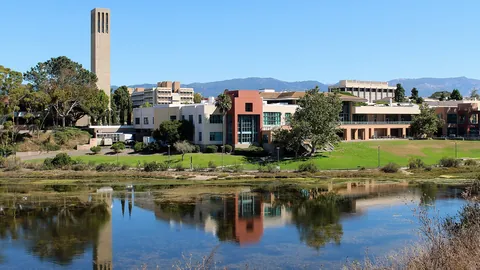
What happened: OpenAI started a science blog on 15 November for researchers to share what they are finding with AI, including where methods fall short. The first guest post is from Nathaniel Craig, who leads the particle theory group at UC Santa Barbara and is a visiting scientist at OpenAI. He describes an October preprint proposing a candidate definition of the Standard Model on a lattice, a grid standing in for spacetime. Craig writes that he had a strategy but could not prove it covered every case, and that GPT-6 Astra "helped turn that strategy into a construction and took the lead in developing the detailed proof." OpenAI, OpenAI science blog
Why it matters: After last week's Yang-Mills proof, OpenAI is building a steady showcase of models contributing to frontier maths and physics. The work is a candidate definition, not a settled result.
Nex-N2.6: an open agent model that says it stopped going round in circles
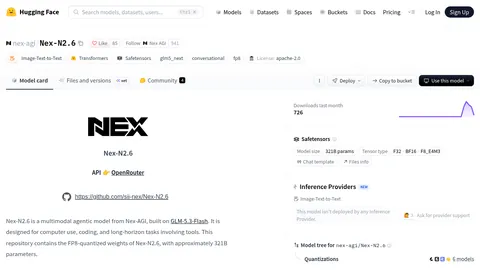
Background: Nex-AGI builds agent models on top of open bases. Its new model builds on GLM-5.3-Flash.
What happened: Nex-AGI released Nex-N2.6, about 321 billion parameters in FP8 weights, aimed at computer use, coding and long tool-heavy tasks. Its model card reports 83.0 on OSWorld, up from 78.0 for the base model, and 84.1 on Terminal-Bench 2.1, slightly below the base model's 84.3. On its own internal tests, repeated reasoning fell from 16.0% to 1.6% compared with Nex-N2.5-Pro, and every tool call used only tools that had actually been offered. The company notes scores depend on the harness and settings. Hugging Face model card, AI Weekly
Why it matters: Looping and calling tools that do not exist are two of the most common ways agents fail. The fixes are self-reported, so they need outside checks before anyone relies on them.