AI Agents Daily Briefing: Tuesday 24 November 2026
Good morning, here's today's briefing. The lead: Anthropic launches Claude Ship, a set of agents that review pull requests, fix them and, if a team's written policy allows, approve routine changes with no person signing off. Also today: OpenAI and Cisco open-source Shirudo, a "guardian agent" runtime that shields running Linux servers until a patch lands, Walmart lets Meta's Muse agent do your Black Friday shopping, Sierra doubles its valuation to $30 billion, and Supertake raises $20 million to turn your market hunches into portfolios run by agents.
LEAD: Anthropic's Claude Ship lets agents approve code, not just write it

Background: Most teams want a person to approve every code change. Anthropic says that on its own Claude Code team, Claude now writes most of the code, so reviews and sign-offs have become the slow part.
What happened: Claude Ship is made of three agents. Code Review, already generally available, checks a pull request from several angles, verifies its own findings and posts them. PR Steward, new in beta, jumps in on failing tests, merge conflicts and review comments, and after every push says what it changed and how to undo it; developers can type "@claude stop" to make it step back, and it is designed never to approve or merge. Claude Approvals, also in beta, reads an approval policy the team writes as a file in the repository and can approve routine changes on its own, or demand human sign-off for others, which Anthropic likens to a smarter CODEOWNERS file. Anthropic says that on the Claude Code team, merged pull requests more than doubled from June to September while the share later reverted fell by more than 40%. It is for Team and Enterprise plans on GitHub, is billed on tokens, and Anthropic recommends starting in observe-only mode. Anthropic, TechCrunch
Why it matters: The last human checkpoint in shipping software is becoming optional, set by a policy file. That also means a badly written policy can wave through code no person has read.
OpenAI and Cisco release Shirudo, a guardian agent for unpatched servers
Background: Finding a security bug is getting faster, but testing and rolling out a patch can still take days or weeks, and blocking the risky operation outright can take a service offline.
What happened: OpenAI and Cisco have open-sourced Shirudo, Japanese for "shield". It uses eBPF, a way to run small programs inside the Linux kernel, so agents can investigate a flaw, write a targeted "shield" that blocks only the dangerous behaviour, and check it against real traffic. A person approves each shield before it goes live, shields are cryptographically signed, and a TPM chip keeps a record of what was loaded or removed. In OpenAI's example, Codex generated a shield that added an input check to Java's Base64 decoder inside a running Elasticsearch service, and it rejected a Java4Shell exploit attempt with no restart. OpenAI president Greg Brockman says finding a bug today "doesn't mean you can patch every system tomorrow". OpenAI
Why it matters: After weeks of stories about attackers' agents moving at machine speed, this is a major lab giving defenders an agent that can patch the gap while the real fix is prepared.
Walmart lets Meta's Muse agent shop for you
Background: Amazon and eBay have blocked AI agents from browsing their sites. Walmart announced an Agent Gateway last month to let agents in on its terms.
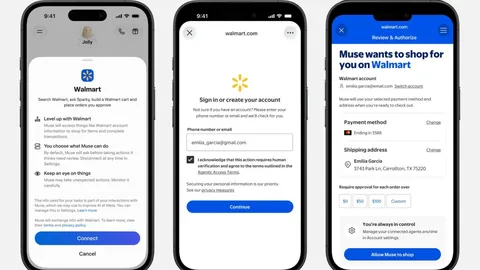
What happened: Walmart has switched the gateway on for Meta's Muse, which can now find Black Friday deals and buy them through Walmart's Sparky assistant, The Verge reports. Purchases go through an "Agent Profile" inside your Walmart account, where you set a spending limit, approve purchases and see everything Muse has bought, at normal Walmart prices and with the usual returns policy. Walmart says the gateway does not share your purchase history with the agent, and that Muse is "just the beginning". Walmart briefly told The Verge the launch was delayed to 24 November, then said it would go ahead on 23 November after all. The Verge
Why it matters: The biggest US retailer is choosing to open its checkout to agents just as rivals shut theirs, with a spending cap as the main safety rail.
Sierra doubles to a $30 billion valuation in six months
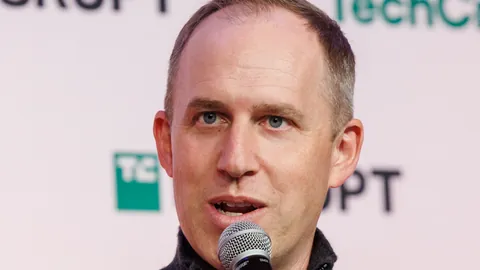
Background: Sierra, co-founded by former Salesforce co-CEO Bret Taylor and Clay Bavor, builds customer service agents for big companies and charges by outcome.
What happened: Sierra has raised $1.75 billion in a Series F led by Greenoaks and Lightspeed, at a $30 billion valuation, double the $15 billion it was valued at less than six months ago, TechCrunch reports. Sierra says it serves almost half of the Fortune 50, with clients including HSBC, Wells Fargo, JPMorganChase, BNY and Next, and said last month its run-rate revenue doubled to $400 million in five months. It is also working with Meta, Stripe and Walmart on protocol definitions for how agents talk to company systems. TechCrunch
Why it matters: Customer service is where companies are paying for agents fastest, and investors are paying up for the leaders: Sierra is now valued above ElevenLabs at $22 billion and Decagon at $4.5 billion, TechCrunch notes.
Supertake raises $20 million to turn your "takes" into portfolios
Background: Most retail investing apps still expect you to pick stocks or funds yourself.
What happened: Supertake lets people describe in plain language how they think the world will change, then iterates with them to turn that view into an investable "take" built by frontier models and trading agents, with its own software limiting what the AI can do, TechCrunch reports. It works with Coinbase and Robinhood. The $20 million seed was led by Adjacent, with Coinbase Ventures and Union Square Ventures, plus angels including Nat Friedman of Meta Superintelligence Labs and Vercel chief executive Guillermo Rauch. TechCrunch
Why it matters: Agents are moving from booking and shopping into managing real money, which raises the stakes on every guardrail.