AI Agents Daily Briefing: Sunday 22 November 2026
Good morning, here's today's briefing. The lead: Signal is switching on screenshot blocking by default on phones to stop AI agents reading private chats, and calls agents built into operating systems an "existential threat". Also today: OpenAI starts testing its always-on Dots agents on the $20 Plus plan, and Tencent gives its WorkBuddy agent control of your computer.
LEAD: Signal blocks screenshots to keep AI agents out of your chats
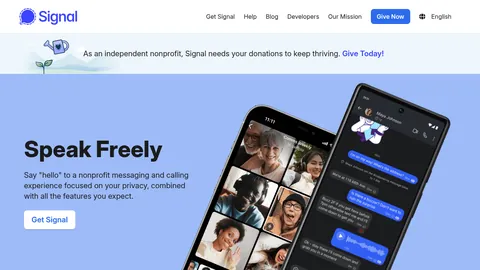
Background: Agents built into operating systems, such as Apple's Siri AI and Google's Gemini Intelligence, work by seeing what is on your screen and acting on it. Reuters reported earlier this week that Meta's Muse agent pulled Signal messages on a Mac and on Android by using broad system permissions, including taking screenshots of chats and extracting the text.
What happened: Signal said on Friday it is restricting screenshots on Android and iOS and switching the restriction on by default, Reuters reports. Users get a pop-up when Signal detects a screenshot attempt or an AI assistant trying to access the screen, and can turn the block off. Signal already blocked screenshots of its Windows app by default, and says it cannot reliably offer the same protection on macOS. In a post, president Meredith Whittaker wrote that agentic AI integrations are making operating systems "increasingly hostile to privacy" and called this "an existential threat to Signal". She admitted the fix is "incomplete" because it does not cover "other more sneaky ways AI agents could potentially access application data", TechCrunch reports. Signal is asking Apple, Google and Microsoft to give developers a simple way to opt their apps out of AI screen reading, notifications and file access, and to explain how their agents work. The three companies did not immediately respond to Reuters. The Hindu (Reuters), TechCrunch
Why it matters: End-to-end encryption protects a message in transit, but an agent reading your screen can copy it out to any server it likes. Signal is the first big app to fight back by default, and the fight now moves to whether phone and computer makers give apps a real off switch.
OpenAI starts testing Dots on the $20 Plus plan
Background: Dots are OpenAI's always-on assistants, launched in September. 9to5Mac says they have their own cloud computer, keep working towards your goals around the clock and can connect to more than 4,000 apps. Until now they were limited to Pro, which starts at $100 a month, and higher plans.
What happened: Thibault Sottiaux, who leads engineering for Codex and ChatGPT, said on 19 November that OpenAI is "starting to test dots with a small number of ChatGPT Plus users", and that he is "seeing a lot more positives around how good the proactivity has been". Dots are also rolling out to all ChatGPT Business Standard users, The Verge reports. 9to5Mac notes it is not yet clear whether Plus users get the same usage allowances as higher plans. 9to5Mac, The Verge
Why it matters: Bringing a background agent down to the $20 plan would put it in front of far more people, which is exactly the kind of spread that worries apps like Signal.
Tencent gives its WorkBuddy agent control of your computer

Background: WorkBuddy is Tencent's workplace AI. Rivals Alibaba and ByteDance have been pushing similar office agents in China.
What happened: Tencent has launched a Computer Use feature for WorkBuddy in public beta on macOS and Windows, PANews reports, citing WorkBuddy's official WeChat account. It recognises an app's interface and clicks, types and scrolls without the software needing an API, and it can run in the background. You watch progress in a small picture-in-picture window, and anything that involves submitting something needs your confirmation. It needs version 5.11.0 or later plus accessibility and screen recording permissions, and Tencent warns that how well it recognises interfaces varies by app. PANews
Why it matters: Screen-driving agents are now standard across Chinese and US big tech, and they rely on the same accessibility and screen recording permissions that Signal is now trying to block.