AI News Daily Briefing: Friday 27 November 2026
Good morning, here's today's briefing. It is a quiet Thanksgiving edition. The lead: the US Federal Communications Commission has authorised SpaceX to put up to one million "Starmind" data centre satellites into orbit, over objections from Amazon, Viasat and astronomers. Also today: Nvidia reportedly halts server shipments to four Southeast Asian countries under the new US export rule, Anthropic's shares slip below their IPO price, SpaceX reportedly cuts rental prices for Nvidia Blackwell chips, and robotics startup Lute raises $20 million to give robots a sense of touch.
LEAD: FCC authorises SpaceX's one million Starmind data centre satellites

Background: Companies are racing to put AI computing in orbit, where solar power is plentiful. Google has Project Suncatcher, and Blue Origin has asked to launch up to 51,600 satellites for "Project Sunrise".
What happened: On 25 November the FCC's Space Bureau granted SpaceX authority for Starmind, a constellation of up to 1,000,000 satellites operating as data centres in low Earth orbit, in shells between 500 and 1,002 km up. The grant itself covers radio links for backup and emergency tracking and control, for use if the satellites' optical links fail. SpaceX must start deploying by November 2033, reach 100,000 satellites by November 2035, half the constellation by 2038 and all of it by 2040. FCC Chairman Brendan Carr said on X that Starmind and competitor constellations will "extend America's lead" in super intelligence; Elon Musk replied "Much appreciated". Amazon's Kuiper, Viasat and the American Astronomical Society had filed petitions to deny, with Amazon calling the plan a "lofty ambition rather than a real plan". Earthjustice attorney Jan Hasselman criticised a holiday-week decision with no environmental review; the FCC said environmental and optical astronomy concerns were outside its authority. FCC order, CNBC, Spaceflight Now
Why it matters: The scale is staggering, and the deadlines run to 2040. It is a plan, not hardware yet, but Washington has now formally backed the idea that AI's power problem gets solved in space.
Report: Nvidia halts server shipments to four Southeast Asian countries
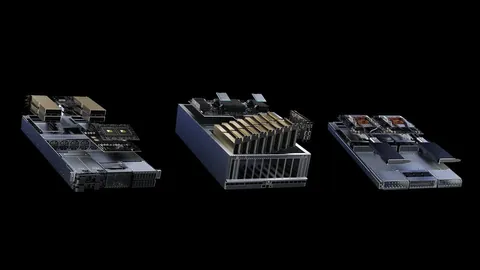
Background: A new US Commerce Department rule requires licences for advanced chips sent to Indonesia, Malaysia, Singapore, Thailand and Brazil, and restricts remote access to big pools of US chips in overseas data centres. It follows the scandal around Nvidia chief executive Jensen Huang, who resigned on 12 November and was reinstated eleven days later.
What happened: Nvidia has ordered its manufacturing partners to stop shipping servers to Malaysia, Singapore, Thailand and Indonesia, the Financial Times reported, with Dell and Supermicro among those telling customers. It is unclear whether the halt is temporary. Citing company accounts, the FT said Nvidia booked $104 billion of 2025 revenue through its Singapore subsidiary, up 72% in a year. DCD
Why it matters: Southeast Asia has been one of the busiest routes for AI hardware. A pause, even a short one, hits data centre projects across the region and shows the new rule is already biting.
Anthropic's shares slip below their $83 IPO price

Background: Anthropic raised $81.3 billion in the largest share offering of all time, and its stock opened at $111.50 on the Nasdaq on 19 November.
What happened: Shares closed down 6.5% on Tuesday, below the $83 IPO price, at $81.91, and fell a further 5.3% in premarket trading on Wednesday to $77.58, Yahoo Finance reported, leaving the stock more than 30% below its highs and the company worth about $1.09 trillion. Yahoo Finance notes the valuation is roughly 30 times trailing sales, and that Dario and Daniela Amodei each disclosed selling about $280 million of shares to underwriters in the IPO. Analysts remain mostly positive: Canaccord Genuity started coverage with a buy rating and a $135 target, Wedbush at $120 and Oppenheimer at $150, CNBC reports. CNBC, Yahoo Finance
Why it matters: The biggest IPO ever is now a test of how much investors will pay for AI growth while the cost of the infrastructure buildout keeps climbing.
Report: SpaceX cuts Blackwell rental prices as Anthropic leaves an H200 cluster
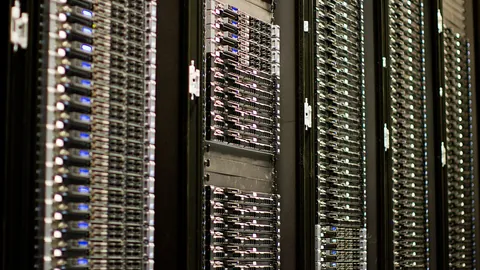
Background: SpaceX rents out Nvidia chips through its AI compute business, which Dataconomy says brought in $7.56 billion in the third quarter, about 52% of company revenue.
What happened: SpaceX has cut spot rental rates for Nvidia's Blackwell B200 and B300 chips on small clusters to $10 to $12 per GPU-hour, from about $15 to $15.50, in line with what big customers such as Anthropic and Google pay, Dataconomy reports. Anthropic has declined to renew a cluster of about 50,000 older Nvidia H200 chips, which SpaceX is offering to others at about $5 per GPU-hour. Dataconomy
Why it matters: Falling prices for the most wanted chips are one of the clearest signs yet that the AI compute squeeze is easing, which is good news for smaller buyers and a warning for anyone who bought capacity at peak prices.
Startup: Lute raises $20 million to give robots a sense of touch

Background: Most robot AI models rely on vision, which shows where things are but not how firmly they are held or whether they are slipping.
What happened: Lute, founded in January 2026 and based in Warsaw and San Mateo, announced $20 million in seed and pre-seed funding, with the seed round co-led by OTB Ventures and FORWARD.one and backers including Credo Ventures, Seedcamp and Naval Ravikant. It builds foundation models trained on touch as well as vision, using elastomer-based sensors it co-designed. Lute says its first model, Lute-0, was trained on far less data than the leading open robot model, π0.5, and matched or beat it on retail pick-and-place tasks in its internal tests, with twice the speed of response. Ten months in, its models already work at Europe's largest automotive parts distributor, the company says. Lute
Why it matters: Touch is one of the missing senses holding robots back in shops and warehouses, and European investors are betting a small team can get it onto real shop floors fast.