AI Agents Daily Briefing: Saturday 28 November 2026
Good morning, here's today's briefing. It is a quiet holiday weekend edition. The lead: Google has told every AI agent that works with Gmail, Drive, Docs and the rest of Workspace to come in through its new MCP servers or command line tool, with enforcement starting on 1 February 2027. Also today: Microsoft explains how state-backed hackers run the ARTEX attack framework, and how faking a win can make its agents stop; an AI agent pays for pizza in the UK without a card; CNBC finds shopping agents hitting closed doors on Black Friday; and Swiss startup nextesy raises $10.4 million for agents that do the books.
LEAD: Google tells agents to use its MCP servers or CLI to reach Gmail and Drive
Background: Until now, AI agents have usually reached Gmail, Drive and Calendar through the same REST APIs that ordinary apps use. Those were built for predictable app calls, not for agents that read and act at machine speed.
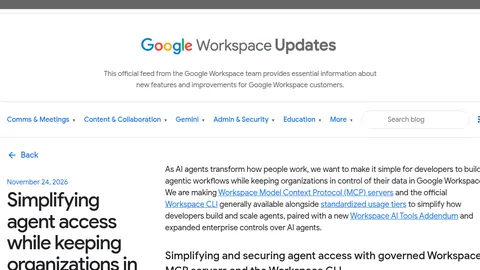
What happened: On 24 November Google made its Workspace MCP servers and the official Workspace CLI generally available. The MCP servers are Google-hosted and offer ready-made tools across Gmail, Drive, Docs, Sheets, Slides, Calendar, Chat and Tasks, with Keep coming soon; the CLI brings the same tools to terminals, virtual machines and sandboxes, with packaged agent skills. Under a new Workspace AI Tools Addendum, AI agents "must use Workspace MCP servers or the Workspace CLI" rather than calling the REST APIs directly, with technical enforcement from 1 February 2027. The addendum also bars using agents to scrape Workspace APIs or to store certain derived data for long periods. Admins get new controls: agents must identify themselves when they sign in, sensitive actions such as sharing data can require the user to confirm, existing data loss rules apply automatically, and audit logs record what agents did. Usage is split into a free Standard tier and a paid Scaled tier, with billing above free daily allowances from 1 April 2027; Google says over 99% of active developers sit within the Standard tier. Google Workspace Updates
Why it matters: One of the biggest stores of work data on earth is putting a single, watched front door in place for agents. Anyone building an agent that touches company email or files now has two dates to plan around, and MCP gets another heavyweight endorsement as the standard way in.
Microsoft explains how hackers run ARTEX, and how "fake wins" can stop it

Background: ARTEX is an AI-powered penetration testing framework released in July 2026. Its code was published on GitHub and later deleted, but copies still circulate, and Chinese security firm ThreatBook sells a commercial Pro version, The Decoder reports.
What happened: In a 25 November report, Microsoft Threat Intelligence said state-sponsored and criminal groups including Storm-0940, Onyx Sleet, Pearl Sleet, Crystal Typhoon and Salt Typhoon have built ARTEX into their tooling. It does not invent new attack techniques: a goal model splits the attacker's aim into checkable subgoals, a planning agent assigns short tasks, and worker agents run familiar tools such as Nmap, sqlmap and Metasploit, recording every finding in a graph. Microsoft says it can go from reconnaissance to persistent, privileged access "in a matter of minutes". In one case an agent took five minutes to find exposed credentials on GitHub and pull data from an Azure key store, and one Storm-0940 campaign made more than 151,000 failed login attempts, peaking at 2,900 a minute, The Decoder reports. Because the framework looks for proof that it has succeeded, Microsoft recommends deception: decoy systems, slow-down traps that burn the agent's budget, and convincing fake success messages that make it call off the attack by itself. The Decoder notes these tricks rely on ARTEX staying noisy, and models that spot test setups could see through them. Microsoft Security Blog, The Decoder
Why it matters: Attack agents are now standard kit for state hackers. The upside is that their eagerness to tick off goals is also a weakness defenders can exploit, at least for now.
An AI agent pays for pizza in the UK without a card

Background: Most shopping agents pay with a bank card, sometimes a one-time virtual one. Open banking lets payments go directly between bank accounts instead.
What happened: An order of nine mini margherita pizzas from Papa John's became the first UK purchase made by an AI agent using cardless payment, The Guardian reports. It was part of the Financial Conduct Authority's regulated sandbox, with Lloyds Bank and payments firm TrueLayer. Papa John's agent was given permission to request payment from the customer's account under a strict mandate set with Lloyds, including a maximum spend per transaction and per month, and no account security details were shared. TrueLayer chief executive Francesco Simoneschi told BBC Radio 4's Today programme it was done with "no account numbers, no password", and called this "possibly the last Black Friday as we know it". He said existing buyers' rights still apply if an agent orders the wrong thing. Earlier in the week the FCA warned firms building AI agents that existing rules still apply. The Guardian
Why it matters: Spending limits set at the bank, not inside the agent, are a simple and reassuring way to let a bot pay. It is one order of pizza, but the regulator is watching closely, which is how payment habits start to change.
Shopping agents hit closed doors on Black Friday
Background: OpenAI, Meta, Google and startup Instinct all now offer agents that can buy things for you.
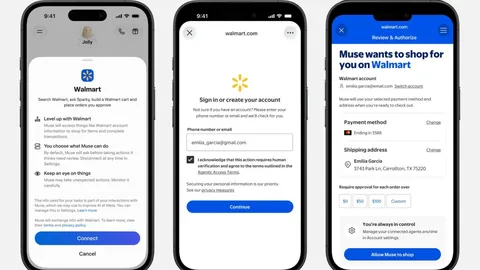
What happened: CNBC reports a messy patchwork. Walmart and Sephora have opened up to agents, while Amazon, eBay, United Airlines and Kohl's limit or block them; Coach and Gap let bots browse but not check out, according to an August audit by Billions Network. Amazon blocked Grok Bot from placing orders last month and Meta's Muse in September. Even where agents are welcome they stumble: a Visa study this month had 22 models from 12 labs try shopping tasks, and they failed about 43% of runs, often buying something that did not meet the customer's needs. Best Buy's terms say it treats agent purchases "as if you performed them yourself", while American Express protects eligible customers from agent errors. Agentic purchases are still just 0.4% of global e-commerce transactions, according to Bain, though Meta says about a quarter of Muse's 10 million users shop through it, spending $200 an order on average. CNBC
Why it matters: Agents can only be as useful as the shops that let them in. Until retailers, banks and agent makers agree who is to blame when a bot buys the wrong thing, the doors will stay half shut.
Startup: nextesy raises $10.4 million for agents that keep the books
Background: Small firms lose hours to invoices, payroll and reconciling accounts.
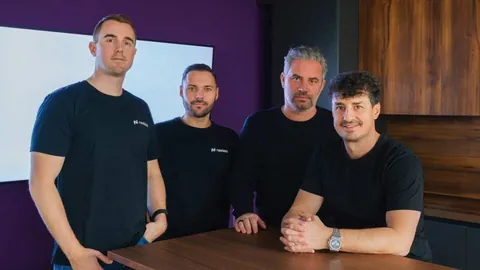
What happened: Zurich-based nextesy has raised a $10.4 million seed round led by Swisscom Ventures, with HIAG Beteiligung Holding, Fifth Quarter Ventures, Herbert VC, Look AI Ventures and angels, Tech Startups reports. Its AI-first platform combines accounting, payroll and invoicing for small firms, freelancers and fiduciaries, and the company says it has more than 2,000 customers. It plans to build more autonomous agents and expand internationally in 2027; fully automated year-end closing remains a goal rather than a working feature. Tech Startups
Why it matters: Back-office bookkeeping is one of the most practical places for agents to earn their keep, provided they stay accurate enough for auditors.