AI Agents Daily Briefing: Sunday 15 November 2026
Good morning, here's today's briefing. The lead: Cursor has explained how a key leaked by a partner ended with a backdoored Claude Code extension in its marketplace. Also today: OpenAI gives its agents a wallet while JPMorgan pushes back, Sierra's Personal Agent Protocol reaches version 1.0 on every Shopify store, Claude Code tries letting the model write code to call its own tools, and LangChain more than doubles its valuation.
LEAD: Cursor traces its marketplace attack to a key exposed at Fireworks
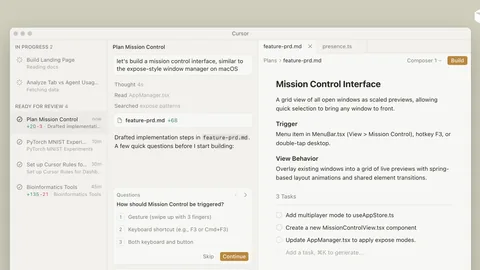
Background: On 29 October Cursor warned that a malicious, unauthorised copy of Anthropic's Claude Code extension had appeared in its VS Code extension marketplace. It promised a fuller account once it had investigated.
What happened: In an incident report dated 13 November, Cursor said the attack started at Fireworks, a third-party training and inference provider. An attacker obtained an access key Cursor had issued to Fireworks, which Fireworks exposed, and used it to copy a read-only storage bucket of coding agent traces, mostly from 2025, from sessions not in Privacy Mode. A small number of those traces held credentials that had not been redacted; Cursor says fewer than 0.01% of customers had API credentials exposed and fewer than 0.05% of users had traces exposed. From there the attacker reached some of Cursor's SaaS tools, including archived non-production code repositories, limited support emails, usage metrics and credentials users had sent to support. On 29 October, with a stolen credential, they placed tampered copies of the extension, versions 2.1.312 and 2.1.313, on the cache that serves Cursor's marketplace. They were up for about 11 hours, and at most 5,000 users may have received them. Anthropic's own extension and the Open VSX source were not compromised. Cursor has moved all inference off Fireworks, rotated credentials, rebuilt the marketplace and redeployed production. BleepingComputer reports the malware tried to install persistent SSH backdoors, and that coding errors likely stopped it working on many Windows and macOS machines. Cursor, BleepingComputer
Why it matters: The weak point was not the model or the editor, but old agent logs with live secrets in them, held by a supplier. Anyone keeping agent traces for training now has a clear reason to scrub credentials before they are stored.
OpenAI gives its agents a wallet, as JPMorgan resists agent shopping

Background: Personal agents such as OpenAI's dots and Meta's Muse have recently been allowed to buy things for people, and banks are split on how to handle it.
What happened: OpenAI launched ChatGPT Wallet on 13 November, built with American Express, Mastercard and Visa. A user adds a card once, then approves each purchase with a check such as Face ID or a fingerprint. The payment network then issues a token, a stand-in card number, so neither the agent nor the shop sees the real card details. It starts in dots for US ChatGPT Pro subscribers aged 18 and over with eligible US-issued cards. OpenAI says it expects later to let people pre-approve purchases within limits they set. The same week, The Wall Street Journal reported, citing people familiar with the matter, that JPMorgan Chase has been blocking agents when customers hand them their card details, and has been slow to adopt the agent tokens rivals use. It also reported that Stripe's Link wallet uses one-time virtual cards for Chase cards instead, which merchants say carry higher fees. OpenAI, CNBC, The Wall Street Journal via Mint
Why it matters: Agent shopping now runs into the card system's rules on fraud, fees and liability. A per-purchase approval with a token is OpenAI's answer, but the biggest US card issuer is not yet on board.
Sierra's Personal Agent Protocol reaches 1.0, live on every Shopify store

Background: Sierra, the customer service agent company led by Bret Taylor and Clay Bavor, proposed Personal Agent Protocol, or Poppy, last month as a standard for how a person's agent introduces itself to a company and learns what it may do.
What happened: Sierra released version 1.0 on 13 November. It says Shopify now publishes a Poppy file automatically for every merchant, and that Meta's Muse agent looks for Poppy first on every site it visits. Poppy sits alongside the Universal Commerce Protocol: Poppy covers identity and permissions, and UCP covers finding products, carts and checkout. A commerce extension co-written with Shopify makes the agent ask the customer before certain actions. Mercury, Synchrony and Turkish Airlines are named as going live, and Sierra says more than 100 companies are now design partners. Sierra, specification
Why it matters: If every Shopify store speaks the same agent protocol by default, agents can shop millions of stores without custom work for each one. That is a big step for a standard that is only weeks old.
Claude Code lets the model write code to call its own tools
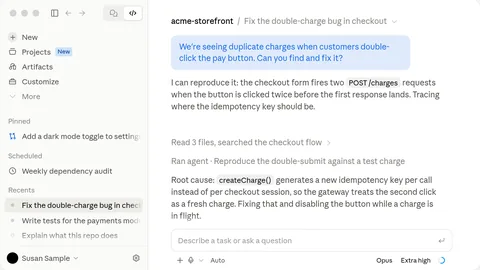
Background: Coding agents normally ask for one tool call at a time, such as a search, a file read or an edit, and read each result before choosing the next.
What happened: Claude Code version 2.1.323 adds Code Mode, an experimental, opt-in feature. Claude writes a piece of JavaScript that makes several tool calls at once, can run commands in parallel and passes one result into the next. Each call still goes through the user's permission rules and hooks, but in auto mode the safety classifier reviews the code rather than each call, and Anthropic warns it cannot see values worked out at run time. Code Mode needs a Claude subscription or Console account, an interactive terminal session and one of Opus 5.5, Sonnet 5.5, Haiku 5.5 or Fable 5.2. It does not work through Bedrock, Google Cloud, Foundry or a gateway, and organisations can block it. Claude Code docs, release notes
Why it matters: Batching tool calls into code can make long, repetitive jobs faster, but it moves the safety check from each action to a script. Anthropic's own docs flag that trade-off.
LangChain more than doubles its valuation to $3 billion
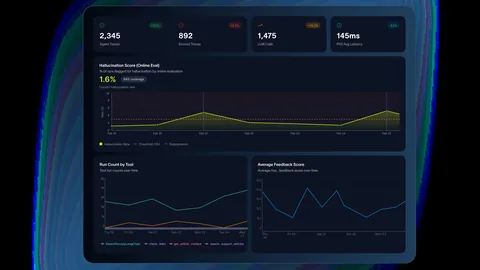
Background: LangChain began in 2022 as an open-source project to help early models search the web and call APIs. It has since moved into managing agents with its LangSmith platform.
What happened: LangChain raised a $300 million Series C at a $3 billion valuation, led by CapitalG, with GIC, DFJ Growth, IVP and Sapphire Ventures taking part, it announced on 13 November. TechCrunch reports that is more than double the $1.25 billion valuation of about a year ago. LangChain claims 7,000 LangSmith customers, including Harvey, Rippling, Clay, Nvidia, Toyota and Salesforce, and pitches the software as not tied to any model or cloud. TechCrunch, Crunchbase News
Why it matters: Investors are paying for the layer that tests, watches and controls agents across vendors, a bet that companies will not want one lab to own all of that.