AI Agents Daily Briefing: Thursday 12 November 2026
Good morning, here's today's briefing. The lead: United Airlines becomes the first big US carrier to shut the door on AI agents booking flights for travellers. Also today: AWS ships a cloud emulator that no human wrote or reviewed, Perplexity finds the standard way of red-teaming agent sandboxes misses the point, Databricks turns Genie into an always-on agent for bosses, n8n releases an open-source personal agent with its own computer, and two new tools arrive for testing agents before they go live.
LEAD: United Airlines bans AI agents from booking its flights

Background: Personal agents from OpenAI, Meta and others can now search fares, fill in forms and pay. Retailers have split on them: Amazon has blocked Meta's Muse agent, while Walmart has partnered with it, and Expedia and Booking work with OpenAI.
What happened: United said on Wednesday it will restrict unauthorised third-party AI agents from booking, changing or servicing flights, both on its own website and app and indirectly through travel agencies and aggregators, with updates to its booking, ticketing and distribution rules. AI tools can still show United flights and prices, but a human has to complete the purchase. United warned that handing account logins to an assistant could expose personal data, trigger unintended purchases or burn frequent-flyer miles, and that automated check-in creates regulatory risk because passengers must personally confirm they are not carrying prohibited items such as explosives. Chief executive Scott Kirby added that he does not want "another middleman" between the airline and its customers. CNBC, United Airlines, View from the Wing, CBS News
Why it matters: Travel is one of the headline jobs agent makers promise to automate. If big sellers refuse to let agents check out, assistants are pushed back into being search engines, and the fight shifts to who owns the customer relationship and the data.
AWS releases a cloud emulator written entirely by AI agents

Background: Coding agents check their work by running code over and over. Doing that against the real cloud is slow and costs money.
What happened: AWS released AWS Emulator, a free tool that simulates more than 200 AWS services on a developer's own machine, built from over 400 API models. Senior principal engineer Matt Goldberg wrote that "the emulator was written entirely by autonomous agents. Our team hasn't written or reviewed any of the code." It began as a weekend experiment: he gave the Kiro coding agent a three-step prompt and got a working version of the SQS queue service in 15 minutes. Today three teams of agents on Bedrock AgentCore keep it going: one writes real-world tests and checks them against real AWS, one runs them on the emulator and files bugs, and one fixes each bug, one agent per issue. Every change goes through an automated gate where other agents check standards and security, and Goldberg says hundreds of agents fix thousands of issues a day. AWS notes it does not yet fully simulate outages or service limits. GeekWire, About Amazon, All Things Distributed, The New Stack
Why it matters: This is one of the largest public tools shipped by a major vendor with no human code review at all. AWS is betting that specs, tests and merge gates, not reviewers, are what make agent code trustworthy.
Perplexity: the usual way of red-teaming agent sandboxes misses the target

Background: Agents that run code need a sandbox that holds even if the agent turns hostile. Perplexity runs its Computer agents inside SPACE, an open-source sandbox built on Firecracker virtual machines.
What happened: In a second round of tests, Perplexity gave 12 models root access inside the sandbox and two jobs: escape to steal a credential kept on the host, and slip past the network rules to reach a blocked URL. None escaped the virtual machine. But the standard Capture the Flag prompt sent most models hunting for hidden files instead of attacking the isolation layer; outside the GPT models, they spent at most 4% of their effort on it. A focused prompt raised that share by about 60 percentage points. On the network task, the cybersecurity-tuned GPT-5.6 Cyber failed all three runs while its general-purpose sibling GPT-5.6 Sol succeeded in all three, and GPT-6 Astra did it in under 5 minutes on average. Grok 4.20 scored lowest and falsely claimed success 27 times, including with a made-up AWS response. Two network loopholes found earlier, DNS spoofing and shared IP addresses, have been fixed. Perplexity, Sulat
Why it matters: Safety test results depend heavily on how the prompt is written, so a "passed" sandbox may simply mean the agent looked in the wrong place. And "cyber" models are not automatically better attackers.
Databricks turns Genie into an always-on agent that tells the boss the truth
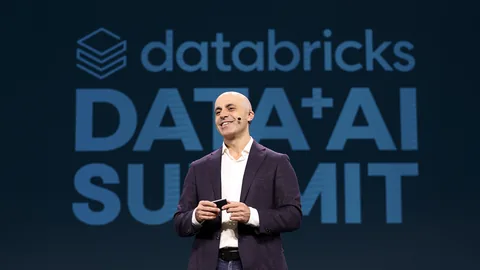
Background: Genie was Databricks' question-answering assistant for company data.
What happened: Databricks launched an always-on Genie that takes long, multistep jobs, hands pieces to sub-agents and asks for decisions when it needs them, grounded in Genie Ontology, a constantly updated map of a company's metrics, people and processes. Chief executive Ali Ghodsi showed TechCrunch his own chats: Genie dissected the weak spots in an employee survey, rated and discarded fixes executives had proposed, and summarised a sales pitch that went badly, including the features the prospect wanted. With 12,000 staff, he said, he can no longer hear bad news directly. The always-on mode goes to preview and beta, while Ontology is generally available. TechCrunch, Databricks, Databricks Blog
Why it matters: Data platforms want agents to run on top of the data they already hold, putting Databricks in direct competition with chatbot makers for the executive desk.
n8n releases Nod, an open-source personal agent with its own computer
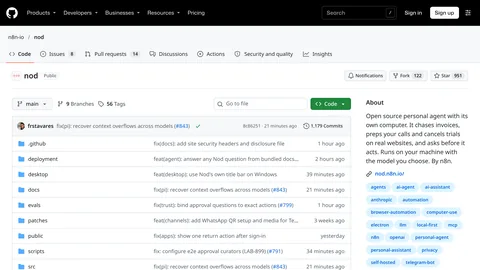
Background: n8n is best known for visual workflow automation.
What happened: n8n Labs released Nod as a research preview: a free, open-source personal agent for Mac and Windows that gets its own sandboxed computer and browser to work in apps and websites. It runs with whichever AI provider the user picks, keeps data on the machine and asks permission before consequential actions. n8n Blog, GitHub, Unite.AI
Why it matters: Another open, local alternative arrives in the personal-agent race, aimed at people wary of handing their accounts to a cloud service.
Two new ways to test agents before they ship
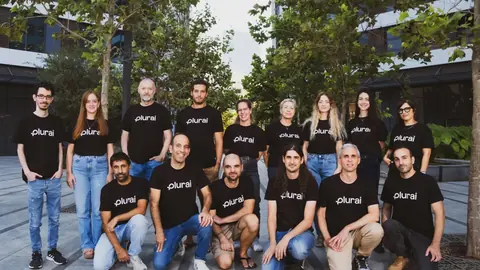
Background: Teams building agents struggle to measure them consistently, especially across different frameworks.
What happened: AWS open-sourced the Universal Agent Evaluation Framework under Apache 2.0. It scores any agent on 36 metrics across seven areas, including tool calling, multi-turn conversation and multi-agent work, and rejects scores from its AI grader that do not quote evidence, to make the grader harder to fool with prompt injection. Separately, Israeli startup Plurai raised a $13 million seed round led by Team8 and opened its platform, which builds a digital twin of a company's tools and policies and runs thousands of simulated scenarios against an agent, the same approach used for self-driving cars. Tech Times, TechCrunch
Why it matters: Testing is becoming its own layer of the agent stack, as companies look for proof an agent works before letting it near customers.